Modafinil for ADHD: What the Evidence Says for Australian Adults
Last updated:
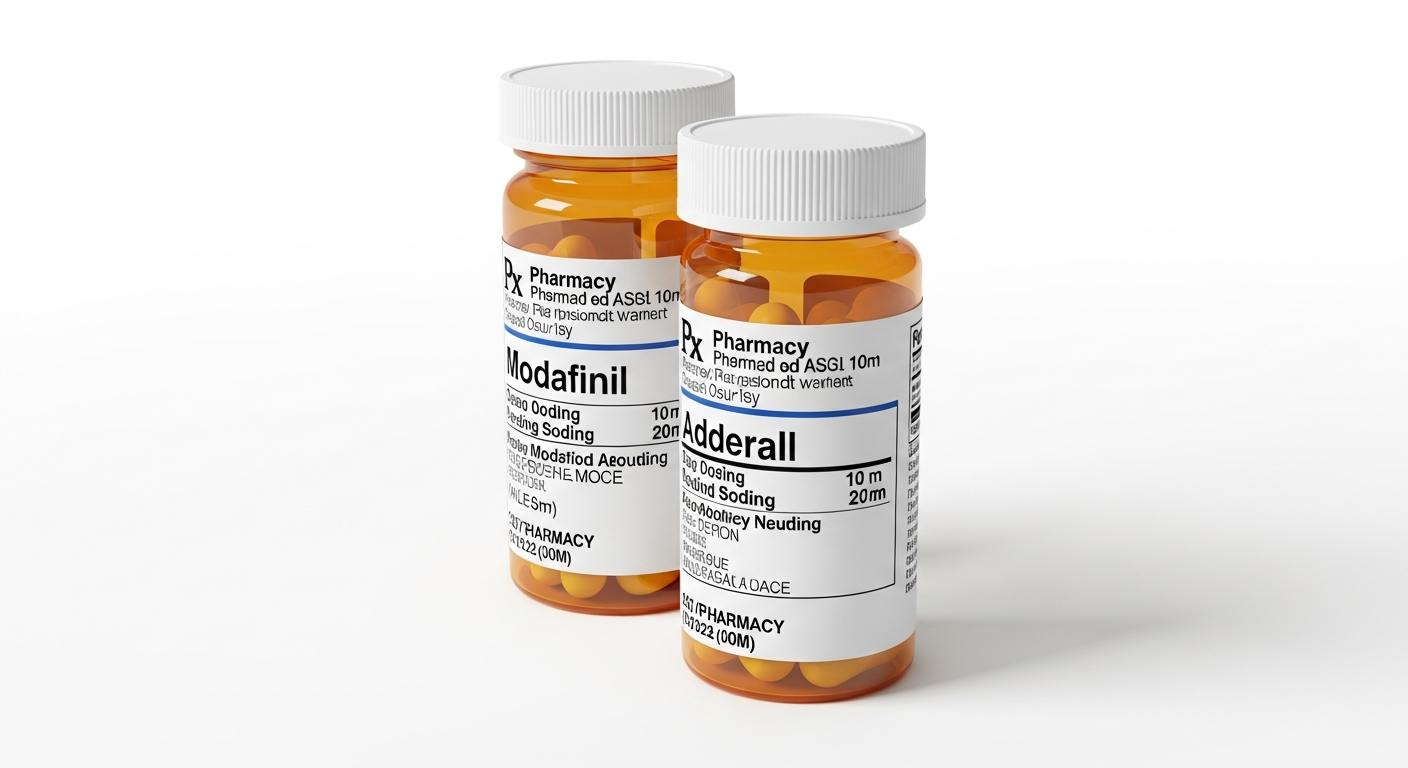
Modafinil is not a first-line ADHD treatment in Australia and is not approved by the TGA for this purpose — its only registered indication here is excessive daytime sleepiness in conditions such as narcolepsy. Any use for attention-deficit/hyperactivity disorder is off-label. The evidence for adult ADHD is modest and mixed: some trials show small-to-moderate symptom improvement, while others show little benefit over placebo. Registered stimulants — dexamphetamine and lisdexamfetamine (Vyvanse) — remain the standard of care because they have far stronger, more consistent evidence. If you have ADHD, the safest path is a proper assessment and a prescribed plan with a clinician.
Why People Ask About Modafinil for ADHD
Modafinil is a eugeroic (wakefulness-promoting agent) rather than a classic stimulant. It has a gentler, more targeted mechanism than amphetamines and a lower reported abuse potential, so it appeals to adults who dislike the "revved-up" feeling, appetite crash, or dependence concerns associated with traditional stimulants. Because it improves alertness and, in some people, working memory and task persistence, it is sometimes tried when standard medications are poorly tolerated. That interest is understandable — but interest is not the same as evidence.
What the Research Actually Shows
The clinical picture for adult ADHD is genuinely mixed. Several randomised trials and reviews indexed on PubMed and NCBI report that modafinil produced statistically detectable improvements in some ADHD rating scales, particularly in paediatric studies, while adult trials have been smaller and less conclusive. Crucially, modafinil never gained a US FDA ADHD indication after a paediatric application raised skin-reaction safety signals, and it has never held an Australian ADHD registration either.
The honest summary: modafinil may help some adults with attention and wakefulness, but the effect size is generally smaller and less reliable than that of registered stimulants. It should be considered — if at all — only after standard options have failed or are contraindicated, and only under specialist supervision.
How It Compares: Dexamphetamine, Vyvanse & Modafinil
In Australia, adult ADHD is usually managed with dexamphetamine or lisdexamfetamine (Vyvanse), both Schedule 8 controlled drugs prescribed under state-based stimulant authority rules. Modafinil is Schedule 4 and, again, unapproved for ADHD.
| Factor | Dexamphetamine | Vyvanse (lisdexamfetamine) | Modafinil (off-label) |
|---|---|---|---|
| TGA ADHD approval | Yes | Yes | No |
| Scheduling | Schedule 8 | Schedule 8 | Schedule 4 |
| Evidence for ADHD | Strong | Strong | Modest / mixed |
| Duration | 4–6 hours | ~10–13 hours | 10–15 hours |
| Abuse potential | Higher | Lower than dex (prodrug) | Low |
| Common issues | Appetite loss, rebound | Appetite loss, sleep onset | Headache, insomnia if late |
Vyvanse is a prodrug that must be metabolised before it becomes active, which smooths its onset and reduces misuse liability compared with immediate-release dexamphetamine. For most Australians formally diagnosed with ADHD, one of these registered stimulants — not modafinil — will be the appropriate treatment.
Dosing Discussion
Because modafinil is unapproved for ADHD, there is no established ADHD-specific dosing schedule in Australia. Where clinicians use it off-label for wakefulness, typical adult doses fall in the 100–200 mg range taken once in the morning, occasionally split. A cautious approach starts low (often 100 mg) to gauge tolerance before considering 200 mg. Because the half-life is long (roughly 12–15 hours), taking it after mid-morning risks disrupting sleep that night — which for anyone with ADHD can make symptoms worse the following day. Our dosage guide covers timing in more detail. None of this is a substitute for an individualised plan from your prescriber.
Safety Caveats You Should Not Skip
- Get a real diagnosis. Adult ADHD overlaps with anxiety, sleep disorders, and mood conditions. Self-treating masks the underlying problem.
- Serious skin reactions. Modafinil carries a rare but serious risk of severe rash (including Stevens-Johnson syndrome). Stop and seek care if a rash appears.
- Cardiovascular caution. Not suitable for people with certain heart-rhythm or blood-pressure conditions.
- Interactions. Modafinil can reduce the effectiveness of hormonal contraceptives and interacts with several medications.
- Pregnancy. Not recommended in pregnancy.
If you're weighing modafinil against stimulants, our Modafinil vs Adderall comparison explains the mechanistic differences in plain English.
The Bottom Line
Modafinil is a legitimate wakefulness medicine, but it is a weak and unproven choice for ADHD compared with the registered stimulants Australian clinicians actually prescribe. Treat any off-label use as a specialist decision, not a shortcut around a proper assessment.
TGA Disclaimer: Modafinil is a Schedule 4 prescription-only medication in Australia and is not TGA-approved for ADHD. Dexamphetamine and lisdexamfetamine (Vyvanse) are Schedule 8 controlled substances. This article is for informational purposes only and is not medical advice. Consult a healthcare professional before using any prescription medication.
References & Further Reading
- Therapeutic Goods Administration (TGA)
- Arnold et al. (2014), Journal of Attention Disorders — 9-week randomised, double-blind, placebo-controlled trial of modafinil in adults with ADHD
- Taylor & Russo (2000), Journal of Child and Adolescent Psychopharmacology — modafinil compared to dextroamphetamine for ADHD
- healthdirect Australia — ADHD overview
- healthdirect Australia — ADHD medicines